Body Asymmetry: Why One Side Feels Different
Body asymmetry is normal. Inside, your organs and diaphragm sit differently on each side, so you tend to lean into one side. Over time, that lean can shape how you breathe, stand and move. Aleena Kanner looks at why pain keeps showing up on one side.

Why Is One Side of My Body Different?
One side of your body feels different because the inside of the body isn’t symmetrical. The liver sits on the right. The heart leans left. The diaphragm, your main breathing muscle, sits and attaches differently on each side. Because of this, most people lean into one side without knowing it. They stand, breathe and shift their weight in a way that favors that side. Over years, the brain and body accept this lean as normal, and patterns form in the ribs, pelvis, neck and jaw. This is one reason pain often shows up on one side. It may also help explain why pain keeps coming back after it settles down. When the pattern underneath stays the same, the body tends to return to it.

Signs of a One-Sided Pattern
- One shoulder sits higher than the other in photos or the mirror.
- One hip always feels tighter, no matter how much you stretch it.
- Your shoes wear down faster on one side or one edge.
- You always turn the same way when you spin, roll over or look back.
- Your jaw shifts to one side when you open your mouth or chew.
- Neck tension builds on the same side, again and again.

Five Lenses on a One-Sided Pattern
Nervous system
The brain often favors one side for balance and movement and keeps choosing it, even when that side gets tired.
Explore this lensVision
If one eye leads, the head can turn or tilt to match, and the neck and shoulders follow along.
Explore this lensTeeth and jaw
How the teeth meet can pull the jaw to one side, which may shift the head and neck with it.
Explore this lensBreath
The diaphragm works differently on each side, so many people breathe more into one side of the ribs.
Explore this lensPosture
Standing with weight on one leg can tip the pelvis and ribs, and that shift travels up and down the body.
Explore this lensHow Aleena Looks at Asymmetry
-
Step 1
Learn your pattern first
Education comes first. Aleena explains how the body’s built-in differences shape the way you breathe, stand and move. You’ll learn what your one-sided pattern may look like before any exercise is chosen.
-
Step 2
A head-to-toe assessment
Aleena looks at your body head to toe through five lenses: nervous system, vision, teeth and jaw, breath and posture. No single system explains everything, so she looks at how they affect each other. Sessions are in person in New York City and Long Beach, Long Island, or virtual.
-
Step 3
Working with your providers
When another piece of the picture needs a closer look, Aleena works with dentists, orthodontists, optometrists, podiatrists and functional medicine doctors. Each provider sees their part, and she helps connect the dots between them.


Questions people ask
Is body asymmetry normal?
Yes, body asymmetry is normal. Everyone’s organs, diaphragm and breathing differ from left to right. Most people lean into one side without noticing, and that’s expected. Aleena pays attention when a one-sided pattern gets stuck, starts to limit how you move, or lines up with pain that keeps coming back.
Can body asymmetry cause pain?
Asymmetry on its own isn’t a problem. When the body stays stuck in a one-sided pattern, some areas may work harder than others, and that strain can be one piece of why pain shows up. Many people who see Aleena have tried physical therapy, chiropractors, orthopedists, dentists and trainers. Each looked at one piece, and nobody connected the dots.
Why does pain switch sides?
Pain can switch sides because the body is one connected system. If one side has carried the load for a long time, the other side may start to compensate, and new tension can show up there. Aleena looks at the whole pattern, head to toe, to see how the two sides relate.
Can breathing change body asymmetry?
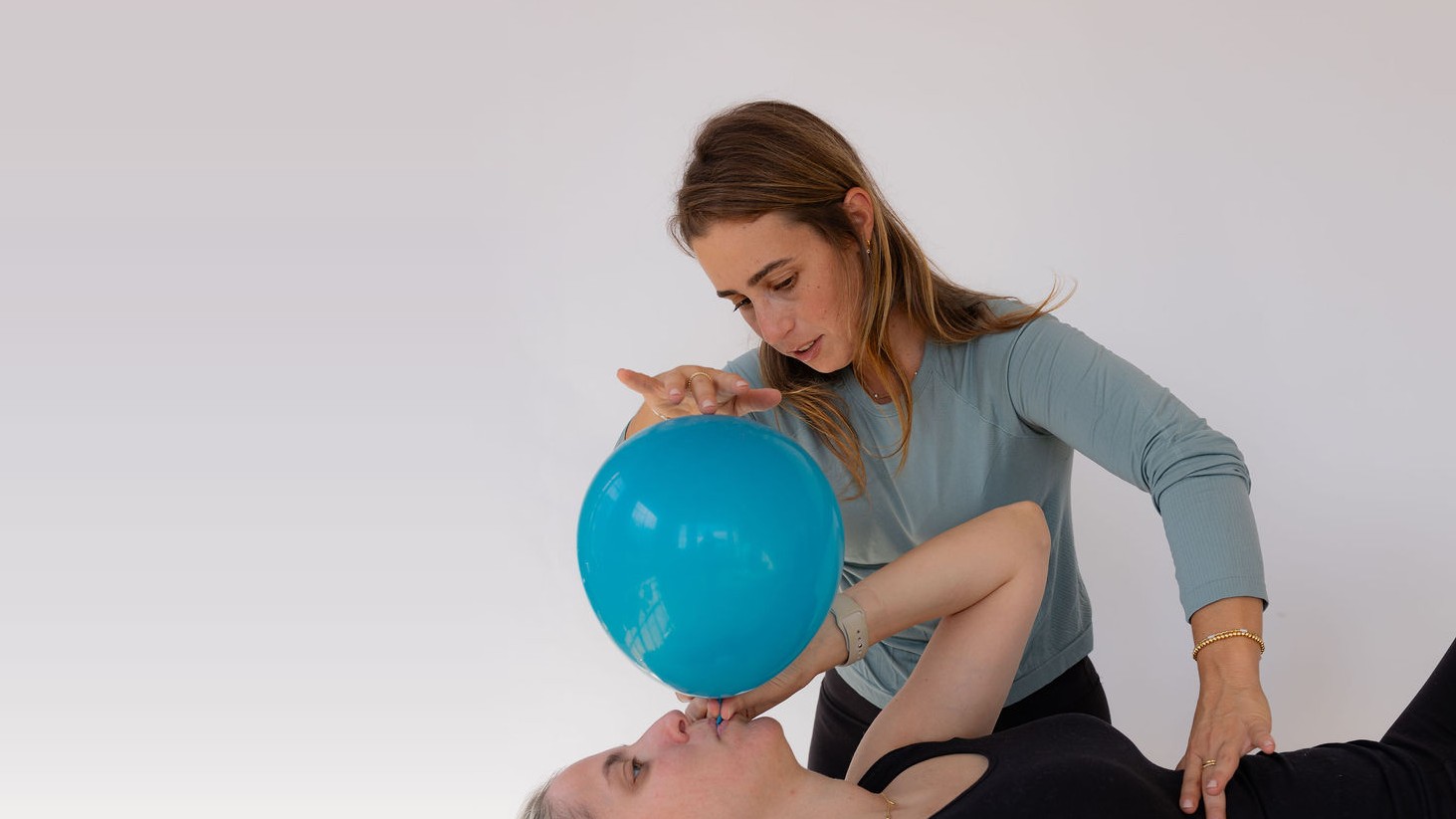
Breathing may play a part, since how you breathe is tied to how your ribs, pelvis and spine sit. Aleena is Postural Restoration Trained (PRT). This approach looks at the body’s natural left-right differences and uses specific breathing and positioning exercises. One position she uses is lying on your back, feet on a wall or box, hips and knees at 90 degrees, breathing out.
How do I start working with Aleena?
You can start by learning. The Body Asymmetry Fix is a mini course from Aleena Kanner, ATC, a Certified Athletic Trainer in New York who connects the dots between the nervous system, vision, teeth and jaw, breath and posture. When you want a closer look, book an assessment online. Sessions are in person in New York City and Long Beach, Long Island, or virtual.
What are the signs of a one-sided pattern in my body, like one shoulder sitting higher or shoes wearing down on one side?
Signs of a one-sided pattern include one shoulder sitting higher, one hip feeling tighter, or shoes wearing down faster on one side. These show up because organs and the diaphragm sit differently on each side of the body, which can lead to a lean that shapes posture and movement over time. Aleena looks at how these signs connect across the nervous system, vision, teeth and jaw, breath, and posture, rather than treating any one sign on its own.
Start with a clear look at your pattern
Pain that keeps coming back isn’t normal. Book an assessment with Aleena, in person in New York City and Long Beach, Long Island, or virtually, and start seeing how the dots connect.