The breath lens
How Breathing Affects Your Posture
Breathing and posture are closely tied. Inside, we aren’t built the same on the left and right, so many of us breathe in a pattern that favors one side. That pattern can shape how you stand, sit and move. Aleena studies breath as one of her five lenses, from head to toe.

The breath lens
What people say about breathing
- I breathe high in my chest and my shoulders rise with each breath.
- I wake up with a dry mouth and wonder if I breathe through it.
- Taking a full, deep breath feels harder than it should.
- One side of my rib cage feels stuck when I try to expand it.
- I sigh or yawn a lot during the day, even when I'm not tired.
- I've tried breathing apps but don't know if I'm doing it right.

How Aleena looks at breath
-
Step 1
Share your story
You book your first assessment online and choose to meet in person in New York City and Long Beach, Long Island, or virtually. It opens with a talk about your history, including how you breathe during the day and at night, along with your sports, work and routines.
-
Step 2
Watch the breath in motion
Aleena then looks at your whole body across the five lenses. For breath, she notices where air seems to go, how your ribs move on each side and how your breathing ties to your jaw, posture and nervous system. She walks you through your pattern.
-
Step 3
Practice at home
You leave with a plan to follow at home, which may include breathing positions like the balloon exercise. If your jaw or eyes call for a specialist, Aleena explains when she brings in a dentist or optometrist. She also works with orthodontists, podiatrists and functional medicine doctors.
Can breathing affect your posture?
Yes. Your diaphragm, the dome-shaped main muscle you breathe with, sits a little differently on each side of your body. Because of that, people often breathe in a pattern that leans to one side, and the pattern can show up in how they stand, sit and move. Aleena looks at how breath links to posture and balance.
When pain keeps coming back, breath is often part of the pattern. Breath sits at the center of the work of Aleena Kanner, ATC, a Certified Athletic Trainer in New York who connects the dots between the nervous system, vision, teeth and jaw, breath and posture. She looks at one body, head to toe, through all five lenses. Since no single lens tells the full story, she pays attention to how breath touches each of the others.
Inside, the body isn’t a mirror image. Organs, the diaphragm and the way we breathe differ from left to right. Those differences set up patterns in breathing, posture and movement, and over time we lean into one side. Her work draws on Postural Restoration, which uses specific breathing and positioning exercises to help the body move out of a stuck pattern.
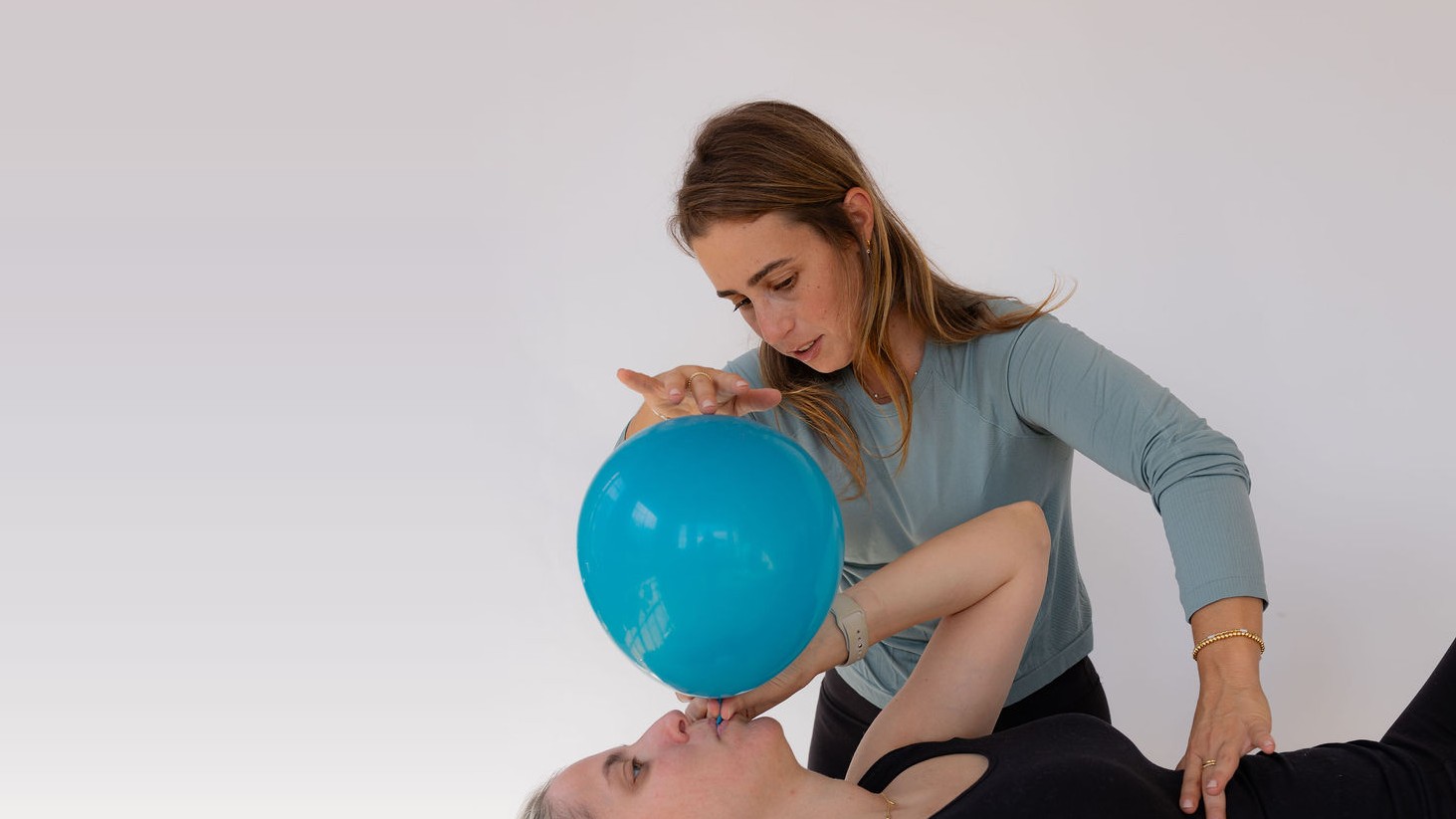
Aleena teaches breathing positions you can do at home. One example: lying on your back with your feet on a wall or box, hips and knees bent to 90 degrees, while you breathe out into a balloon. Assessment and education come first.

What Aleena’s clients love about her
5.0 Google, 46 reviews
Breathing resources from Aleena
Better Breathing 2.0 is an e-book with two breathing techniques. Both are about how body position and breathing tie to a calmer nervous system. Understanding Mouth Tape is a free guide about nasal breathing at night, meaning breathing through your nose while you sleep.

 Understanding Mouth Tape
A free guide to how a simple strip of mouth tape can support nasal breathing at night. Step 1 of the Start Here path.
Start here ifI breathe through my mouth at night. See inside
Aleena’s monthly membership
RootedWell: learn with Aleena every month
RootedWell brings Aleena’s connected view of the body into one place. Inside, you’ll find live Q&A, expert lectures, a full recording library, new breathing techniques each month and a provider network. You can learn at your own pace and come back to topics whenever you need them. Each part is built to help you understand how breath, posture and the whole body work together, so you can keep learning over time with steady, clear guidance.
- A live Q&A with Aleena every month
- Expert lectures to keep you learning
- A full recording library to watch anytime
- A provider network you can turn to
- New breathing techniques each month
$40a month
Cancel anytime. No contracts. No refunds.
Join RootedWellRootedWell does not include a 1:1 assessment. To work with Aleena one on one, book an assessment separately.
Questions people ask
What is the diaphragm and what does it do?
The diaphragm is the main muscle you breathe with. It’s a dome-shaped muscle under your lungs that moves down as you breathe in and back up as you breathe out. It sits a little differently on each side, which can shape how you breathe, stand and move. Aleena looks at your breathing pattern in her assessment and at how it connects to the other four lenses.
What is balloon breathing?
Balloon breathing is one of the breathing positions Aleena teaches people to do at home. You lie on your back with your feet on a wall or box, hips and knees bent to 90 degrees, and breathe out into a balloon. Positions like this use breath and body position together to help the body move out of a stuck pattern. Aleena explains how each one fits your own pattern.
What is mouth taping?
Mouth taping is the practice of placing a small strip of tape over the lips at night, with the aim of breathing through the nose while you sleep. Aleena’s free guide Understanding Mouth Tape is about nasal breathing at night. She looks at your breath alongside your teeth and jaw, and works with dentists when the mouth needs a closer look.
Can you do breathing work with Aleena online?
Yes. Aleena offers virtual sessions along with in-person sessions in New York City, and you book your first assessment online. Her RootedWell membership, $40 a month, adds new breathing techniques each month, plus live Q&A, expert lectures, a recording library and a provider network.
What are signs that your breathing pattern is affecting your posture?
Chest breathing and a dry mouth in the morning can both be signs worth noticing. If your shoulders rise with each breath instead of your belly expanding, or you wake up breathing through your mouth, these can point to a one-sided breathing pattern. Aleena looks at these signs as part of how breath links to posture and balance.
What breathing positions can you practice at home?
Aleena teaches simple positions you can practice at home to work with your breath. One example is lying on your back with your feet up on a wall or box, hips and knees bent to 90 degrees, while breathing out into a balloon. Assessment and education come first before building a home practice.
More lenses, head to toe
Start with a clear look at your pattern
Pain that keeps coming back isn’t normal. Book an assessment with Aleena, in person in New York City and Long Beach, Long Island, or virtually, and start seeing how the dots connect.