What does the diaphragm have to do with posture?
Your diaphragm is your main breathing muscle, and it also helps hold your trunk steady. Because it connects to your lower ribs and the front of your spine, the way it moves can affect how your ribs, back and pelvis sit.
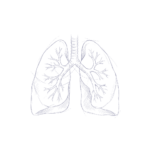
Picture a dome-shaped muscle tucked under your ribs. When you breathe in, it moves down and your ribs widen. When you breathe out, it rises back up and your ribs settle. That up-and-down motion happens thousands of times a day, so it has a lot of say in how your body holds itself.
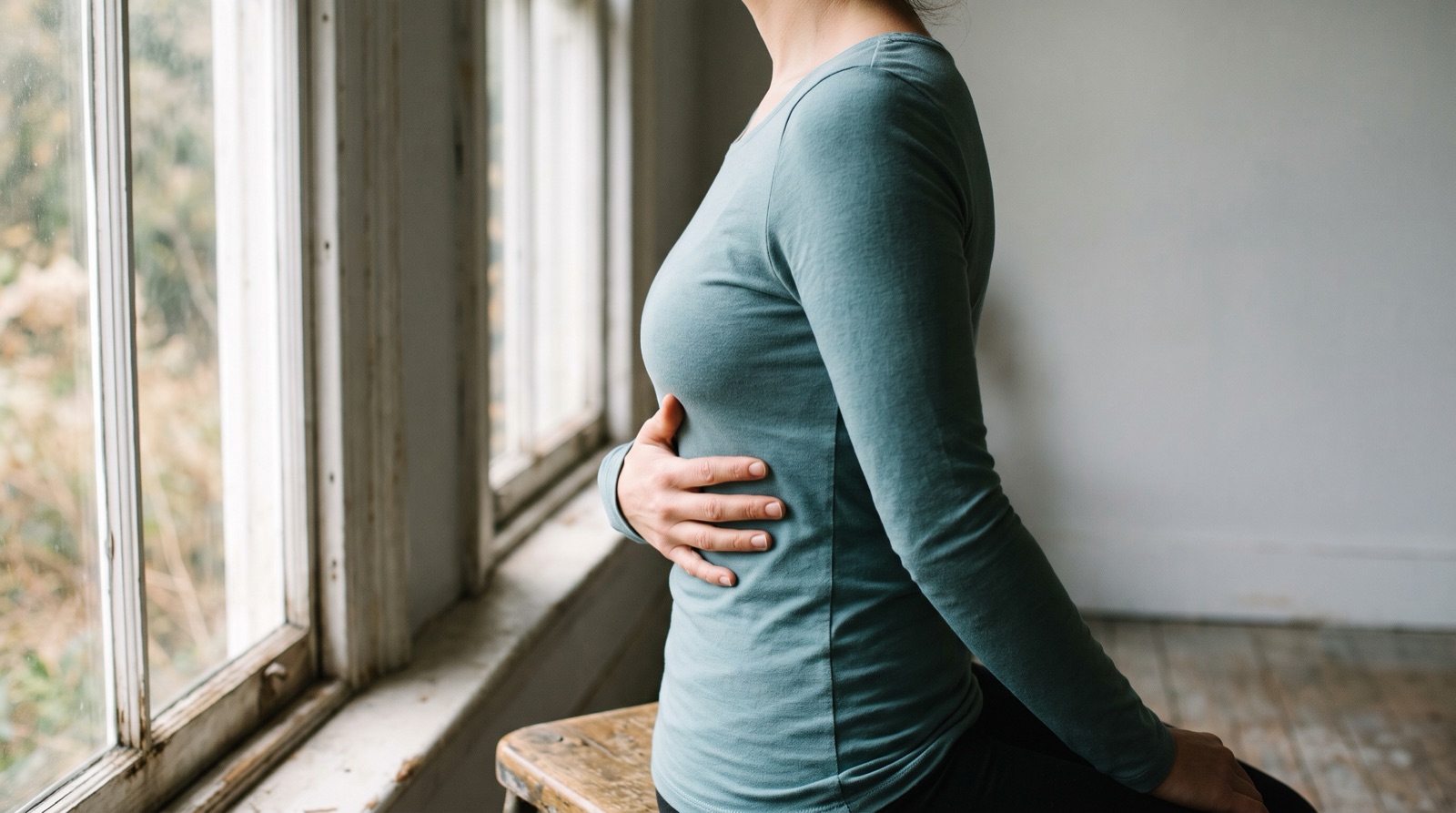
Sometimes the diaphragm doesn’t get a full, easy turn. People may breathe mostly into the upper chest, hold their breath when they focus, or have trouble letting air all the way out. When that happens, muscles in the neck, shoulders and upper back often help lift the chest. In my practice, I often see ribs that flare forward, a lower back that arches more, or shoulders that ride up toward the ears. People describe feeling tight, braced, or like they can’t quite get a full breath.
None of this means something is wrong with you. It simply shows how closely breathing and posture are tied together.
Why does breathing tend to favor one side?
Your body is built a little differently on the left and right, so your breathing usually is too. Your organs, your diaphragm and the way air fills each side of your chest all differ a bit, and over time that can create a pattern you lean into.
Everyone has these natural left-right differences. They’re a normal part of being human. Where they matter is in the habits they create. You might shift your weight onto one leg when you stand, sleep on the same side every night, or notice that one shoulder sits lower than the other. Your ribs may look or feel different from one side to the other.
The approach I use looks at these left-right differences and the patterns they shape in breathing, posture and movement. From there, I teach specific breathing and positioning exercises that help you sense and use parts of your body you may tend to skip. I describe this as a way to build awareness and options, and every body responds in its own way.
I was a gymnast from age 5 to 22 and then a coach, so I’ve spent most of my life around how bodies line up and move. Breathing turned out to be one of the biggest pieces of that picture.
What might you notice if breathing is shaping your posture?
You might notice tension in your neck and shoulders, ribs that stick out in front, or a habit of standing on one leg. These are things people describe to me often, and they’re worth paying attention to.
Here are some other signs people mention:
- Sighing or yawning a lot during the day
- Holding your breath when you lift, focus or feel stressed
- Feeling like you can’t breathe all the way out
- Clenching your jaw or resting your tongue low in your mouth
- A lower back that feels tight when you stand for a while
Breathing also connects to other systems. Your jaw, your eyes and your nervous system all play a part in how you hold your head and trunk. A tight jaw can change how you breathe. A stressed nervous system can keep your breath high and fast. That’s why I rarely look at breathing by itself.
These signs don’t point to one cause. They’re simply clues that help guide a closer look.
How can you check your breathing at home?
You can try a simple position I teach: lie on your back with your feet on a wall or box, hips and knees at 90 degrees, and breathe out slowly. Then notice what happens in your ribs, belly, neck and back.
- Lie on your back on the floor.
- Place your feet flat on a wall or a sturdy box so your hips and knees bend to 90 degrees.
- Let your arms rest by your sides.
- Breathe in gently, then breathe out slowly and fully. Some people like to breathe out into a balloon to feel the exhale more clearly.
- Pay attention to what moves. Do your ribs drop down toward your belly? Do your neck or shoulders tense up? Does your lower back lift off the floor or settle into it?
Try a few slow breaths.
This position is meant to help you notice your pattern. If anything hurts, stop and check in with a provider. If you’d like to go further, my e-book Better Breathing 2.0 walks through two breathing techniques that tie position and breathing to a calmer nervous system.
When to see someone
See a medical provider right away if you have sudden or severe pain, numbness or tingling, weakness, or pain that started after an injury or fall. If you have chest pain or sudden trouble breathing, call 911.
Before I worked in private practice, I was an EMT and EMS Chief, so I take these signs seriously. Here’s a plain guide to who to see:
- Sudden, severe or new pain, numbness, weakness, or pain after an injury: your doctor, urgent care or the emergency room
- Ongoing jaw tightness, clenching or bite concerns: a dentist or orthodontist
- Headaches with screen time, eye strain or balance changes: an optometrist, often one who focuses on vision and the body
- Foot pain or changes in how you stand and walk: a podiatrist
- Ongoing fatigue or questions about your whole system: a functional medicine doctor
I work with all of these providers. Bringing the right people in early helps everyone see more of the picture.
How I look at this
I look at breathing as one of five lenses: nervous system, vision, teeth and jaw, breath and posture. No single system explains everything, so I look at how they affect each other.
Many people come to me with pain that keeps coming back. They’ve often seen physical therapists, chiropractors, orthopedists, dentists and trainers. Each one looked at a piece, and nobody connected the dots. My role is to look head to toe and help you understand how those pieces fit together.
Education and assessment come first. I want you to understand what I’m seeing and why before we talk about any next steps. That way, you can make choices that make sense for you.
My background shapes this view. I earned my BS in Exercise Science at SUNY Cortland and my MS in Athletic Training at the University of Arkansas in 2016, where I worked with elite track athletes during the Olympic year. I competed in Olympic weightlifting from 2016 to 2019. I took my first Postural Restoration Institute course in 2018. In 2023, I co-authored two COVD posters on collaborative care between optometry and this approach, and I presented at OEPF that December and at OVDRA in 2025.
I see people in person in New York City and Long Beach, Long Island, and virtually.