How can foot pain connect to the rest of your body?
Foot pain can connect to the rest of your body because your feet carry everything above them. The way you stand, breathe and shift your weight can change how much load each foot takes.
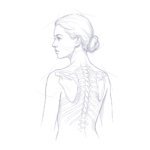
When someone comes to me with plantar fasciitis, I look at the foot. I also look at the knees, hips, pelvis, ribs and head, and at how they all stack over the ground. Your feet meet the floor with every step. So when something higher up leans, tilts or holds tension, your feet often adjust to it.
Our bodies aren’t symmetrical inside. Our organs sit differently on each side. The diaphragm, your main breathing muscle, is shaped differently on the left and the right. We even tend to breathe a little differently into each side. An approach from the Postural Restoration Institute looks at these natural left-right differences and the patterns they create in breathing, posture and movement. It uses specific breathing and positioning exercises to work with those patterns.
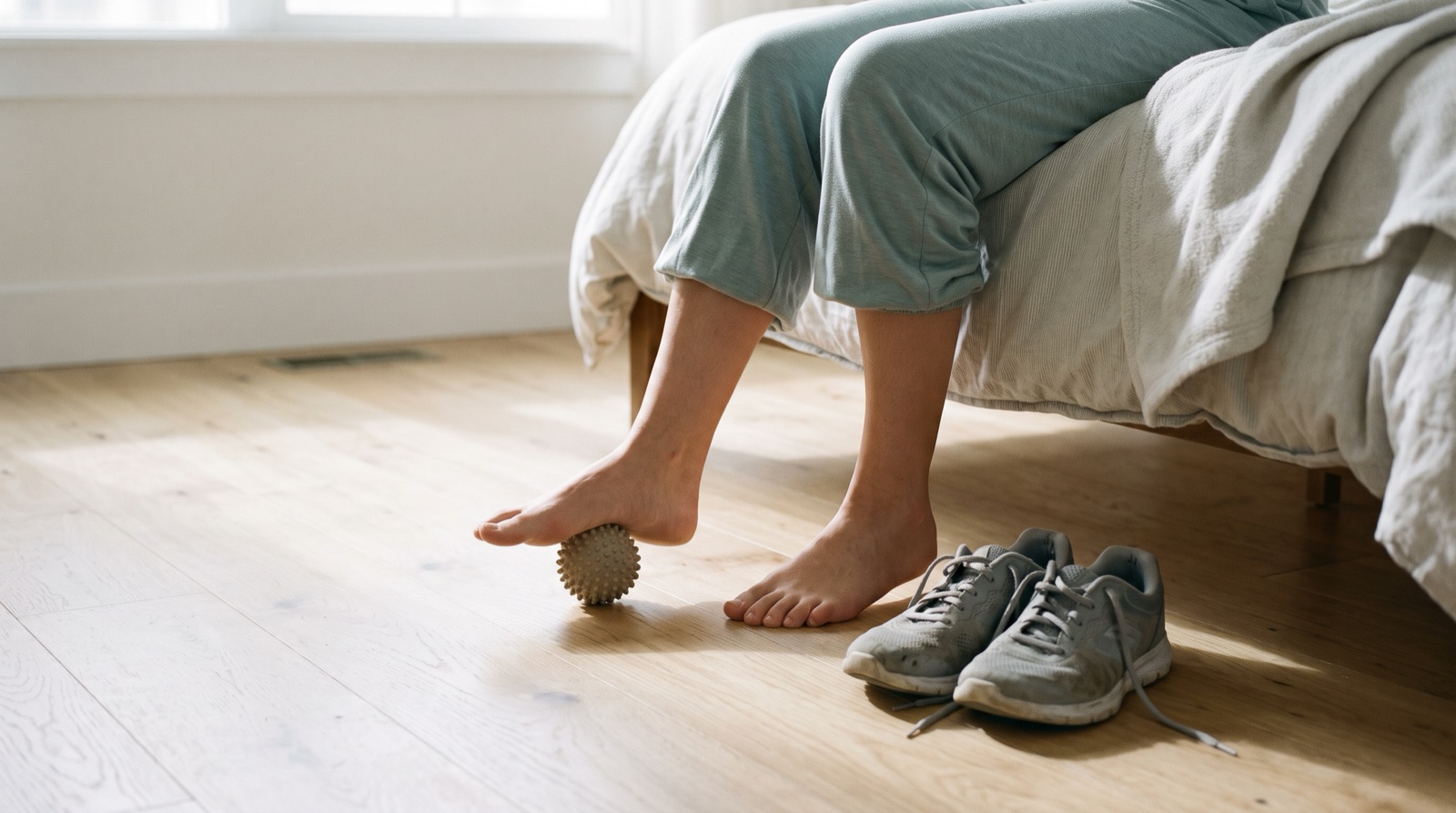
I find this way of looking very useful for foot pain. Many people lean into one side without knowing it. You might stand on the same leg while you wait in line, or always cross the same knee when you sit. Over time, one foot may carry more of the work. That’s often the foot people tell me about.
Why does plantar fasciitis keep coming back for some people?
For some people, foot pain keeps coming back because the pattern above the foot never got looked at. The foot gets care, and the habits that load it stay the same.
Many of the people I see have already tried a lot. They’ve seen physical therapists, chiropractors, orthopedists or trainers. Some have tried new shoes, inserts, stretching and rest. Each provider looked at one piece, and that piece may have mattered. Still, nobody connected the dots between the foot and the rest of the body.
People often describe pain that’s worse on one side. Some say their foot pain showed up around the same time as hip tightness, low back tension or a stiff neck. Others tell me they never feel like they’re standing evenly.
I don’t assume any one thing is the cause. No single system explains everything. I look at how the systems in your body affect each other, and I explain what I see so you can understand your own patterns.
How does breathing relate to the way you stand?
Breathing moves your ribs, and your ribs sit right above your pelvis and hips. So the way you breathe can shape how your trunk sits over your legs and feet.
Many people I see breathe high into the chest or hold their breath without noticing. Some keep their ribs lifted and their low back arched for most of the day. When the trunk sits that way, the body may shift its weight forward or back, and the feet adjust to match.
This is part of why breath is one of my five lenses. Posture is the main lens for foot pain, and breathing is closely tied to it. Vision, the jaw and the nervous system can play a part in how you hold yourself too. For example, the way your eyes and head orient can change how you balance. I keep all of these in mind, even when the pain is in your heel.
What can you try at home to notice your patterns?
A simple breathing position can help you notice how your ribs, pelvis and breath work together. It’s a position I often teach in my practice.
- Lie on your back on the floor.
- Put your feet flat on a wall or on a box.
- Set your hips and knees at about 90 degrees.
- Breathe in gently, then breathe out slowly and fully. Some people breathe out into a balloon.
- Rest, then repeat for a few easy breaths.
As you breathe out, notice what you feel. See if your back sinks toward the floor or your ribs soften down. Notice if one side of your back or hips presses into the floor more than the other. Let yourself simply notice.
You can also pay attention to how you stand during the day. Notice which leg you lean on, which way you shift when you’re tired, and which foot feels more worn out by evening.
Stop if anything hurts or feels wrong, and check with your podiatrist or doctor before you try new exercises. This position is for learning about your body, and your foot still needs its own care.
When to see someone
Foot pain should be checked by a podiatrist or doctor. Please don’t wait if something feels serious.
Get medical care right away if you have sudden or severe pain, pain after an injury or fall, or you can’t put weight on your foot. Numbness, tingling or a foot that feels weak are also signs to get checked soon. So are swelling, redness, warmth, or pain that keeps getting worse.
A podiatrist is a good first stop for the foot itself. Your primary care doctor can also help you sort out where to go. If the pain came on after a fall or you can’t walk on it, urgent care or an emergency room may be the right place.
I work with podiatrists, and I’m glad to work alongside yours. A podiatrist can check what’s happening in the foot. I can look at how the rest of your body may be loading it. Both views are useful, and I always want your foot checked first.
How I look at this
I look at the whole body, head to toe, through five lenses: nervous system, vision, teeth and jaw, breath and posture. For foot pain, posture is the main lens, and I keep the others in view.
Many people come to me with pain that keeps coming back. Education and assessment come first. I explain what I see, how the parts may connect, and what you can notice on your own. I want you to understand your body well enough to take part in every choice.
Movement has been part of my life for a long time. I was a gymnast from early childhood into my early twenties, and then I coached. I’m a Certified Athletic Trainer, and I worked with elite track athletes during an Olympic year. Later, I trained in Olympic weightlifting. Now I run a private practice in New York City and Long Beach, Long Island.
I also work with dentists, orthodontists, optometrists, podiatrists and functional medicine doctors. Each one sees an important part of you. My role is to help connect the dots between those parts.
I see people in person in New York City and Long Beach, Long Island, and virtually. If you’d like to learn more first, my Plantar Fasciitis e-book is a good place to start.