
When pain keeps coming back, it often means the pattern behind it is still running. The sore spot gets attention and calms down for a while. Then the same habits in how you breathe, stand, see and hold your jaw load that spot again.
I hear this all the time in my practice. People tell me they’ve tried physical therapy, chiropractors, orthopedists, dentists and trainers. Each one looked at a piece, and nobody connected the dots. Below, I’ll walk through why pain keeps coming back, what you can notice on your own, and when to get help.
Why does pain come back after it seemed to go away?
Pain can fade when the sore area settles, then return when your body slips back into the same way of moving and breathing. The spot that hurts is often where a bigger pattern shows up, so it takes the load again and again.
Your body works as one connected system. Say your ribs sit a certain way, your breath favors one side, and your head drifts forward toward a screen. Some muscles end up working all day while others barely help. The place that hurts may simply be the place doing too much.
People describe this in similar ways. The back feels better for a while, then flares after a long day at the desk. The neck loosens after a massage, then tightens by the end of the week. The hip calms down, and then the knee starts. These patterns point to how the whole body is working together, more than to one injured part.
What patterns can keep loading the same spot?
The patterns I see come from five places: your nervous system, your vision, your teeth and jaw, your breath and your posture. Any one of them can shift how you stand and move, and they tend to affect each other.
Here’s how each one can play a part:
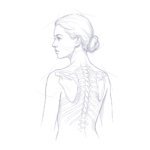
- Posture. Our bodies aren’t symmetrical inside. Your organs, your diaphragm and the way you breathe differ from left to right. Over time, many people lean into one side, shift weight onto one leg, or turn more easily in one direction.
- Breath. If you breathe mostly into your upper chest or hold your breath when you focus, your neck and shoulders may pick up work your diaphragm could share.
- Vision. Where your eyes aim and how they team up can change where your head sits. New glasses, LASIK or cataract lenses may shift how you hold yourself and how steady you feel.
- Teeth and jaw. Clenching, grinding or a bite that feels off can link to tension in your neck, head and upper back. Dental work like braces, expansion or bite work can change this picture too.
- Nervous system. When your system stays on high alert, muscles tend to stay guarded. Pain can feel louder and stick around longer.
No single system explains everything. What matters is how these pieces connect for you.
Why can pain return after seeing so many providers?
Pain can return when each provider looks at the part in front of them and the full pattern never gets pieced together. Every specialist brings real skill. The gap tends to sit between the visits.
A physical therapist may work on your hip. A dentist may look at your bite. An optometrist may check your eyes. A trainer may build your strength. Each step can help. Yet if the way you breathe keeps tipping your ribs, or your eyes keep pulling your head forward, the old pattern may keep showing up.
That’s why I work with dentists, orthodontists, optometrists, podiatrists and functional medicine doctors. When we share what we each see, the whole picture gets clearer. I’m also training in Quantum Neurology and Neuro-Emotional Technique to better understand the nervous system side of this.
What can I notice and try at home?
You can start by noticing your own habits and trying one simple breathing position. Noticing comes first, because it shows you where your body likes to go.
Pay attention to things like:
- Which leg you stand on while you wait in line
- Which side you sleep on or chew on
- Whether you hold your breath when you focus on a screen
- Whether your head drifts forward when you read
Then try the position I teach:
- Lie on your back.
- Place your feet on a wall or a box so your hips and knees are at 90 degrees.
- Breathe out slowly and fully.
- If you’d like, breathe out into a balloon.
Notice whether one side of your back meets the floor more, where you feel your breath, and how your neck feels afterward. Use this as a way to learn about your body. If anything hurts, stop and reach out to a provider.
When to see someone
See a doctor right away if your pain is sudden or severe, if you feel numbness or tingling, or if pain started after a fall, crash or other injury. Those signs need medical care before anything else. I was an EMT and EMS Chief, so I take them seriously.
Get help quickly if you notice:
- Sudden or severe pain
- Numbness, tingling or weakness in an arm or leg
- Pain after an injury, fall or accident
- Pain with a fever, or pain that wakes you at night and won’t settle
- Trouble with bladder or bowel control
- Chest pain or trouble breathing
For these, go to urgent care, the emergency room or your primary care doctor. For a bite that suddenly feels different or a jaw that locks, see your dentist. For changes in your vision, see your optometrist or eye doctor. For foot pain that changes how you walk, a podiatrist is a good place to start.
If you’ve been checked, nothing urgent turned up, and the pain still keeps returning, that’s a good time to look at the bigger pattern.
How I look at this
I look at you head to toe through five lenses: nervous system, vision, teeth and jaw, breath and posture. I start with education and assessment, so you understand your pattern before we choose what to try.
My background shapes this. I was a gymnast from age 5 to 22, then a coach. I earned a BS in Exercise Science at SUNY Cortland, where I was an EMT and EMS Chief. I earned my MS in Athletic Training at the University of Arkansas in 2016 and worked with elite track athletes that Olympic year. I did Olympic weightlifting from 2016 to 2019.
In 2018, I took my first course from the Postural Restoration Institute. This approach looks at the body’s natural left-right differences in the organs, the diaphragm and the way we breathe. It studies the patterns those differences create in breathing, posture and movement, then uses specific breathing and positioning exercises. In 2023, I co-authored two COVD posters on collaborative care between optometry and this approach. I presented at OEPF in 2023 and OVDRA in 2025, and I was quoted in Forbes.
I see people in person at my private practice in New York City and Long Beach, Long Island, and virtually. We’ll talk through what you’ve tried, look at how you breathe, stand, see and move, and bring in the right providers when it makes sense.